What Is the Most Durable Material for Kids EVs?
Parents often ask, “How to choose durable materials for kids electric vehicles?” The answer is not simply “choose the hardest material.” A reliable kids EV must handle driveway bumps, wet grass, dusty paths, and repeated charging. Its body panels should resist cracking and fading. Its frame should remain stable when a child turns sharply.
Materials engineer Dr. Vannessa Goodship offers a useful principle: “A material is durable only when it survives its intended environment.” That idea matters here. High-quality ABS plastic can absorb minor impacts without adding excessive weight. HDPE can resist moisture and rough outdoor contact. A powder-coated steel frame can provide stronger structural support, although it may increase the vehicle’s weight. The best design often combines these materials instead of depending on one option.
Look closely at the details. Check thick panel edges, reinforced mounting points, sealed battery compartments, and flexible bumpers. A shiny surface proves very little. Some plastics become brittle after long exposure to sunlight. Some metal frames rust near scratched joints. Testing should include repeated impacts, vibration, temperature changes, and water exposure.
There is no perfect material. That is the uncomfortable part. A heavier vehicle may feel stronger, yet it can become harder for children to control. A softer plastic may prevent sharp cracks, but it may scratch easily. Durable materials must support safety, comfort, repairability, and sensible weight. The strongest choice is not always the smartest choice.
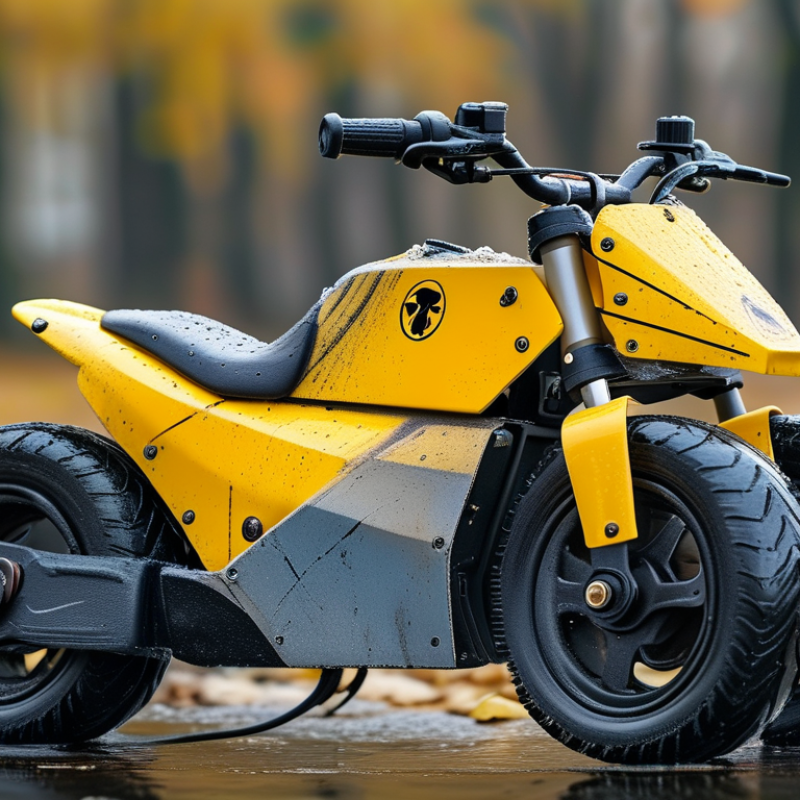
What Is the Most Durable Material for Kids EVs?
Material Durability Criteria for Kids’ EVs
Durability begins with how the vehicle handles real play, not just showroom appearance. High-impact polypropylene or HDPE can resist bumps against walls, curbs, and garden furniture. These plastics also resist moisture and are easier to clean after muddy rides. A steel frame adds useful strength beneath the body, especially around the seat mounts and wheel supports. However, steel can rust when scratches expose untreated metal. Aluminum avoids rust more effectively, but it may bend under sharp impacts. No material is perfect.
Look for thick panels, rounded edges, reinforced mounting points, and firmly secured fasteners. The wheels should tolerate uneven ground without excessive cracking or wobbling. UV-resistant plastic matters when the vehicle stays outdoors, because sunlight can make ordinary plastic brittle. Battery compartments need protection from dust and splashes, while ventilation should prevent heat buildup. In practical testing, I would inspect the underside after several rides, where hidden scrapes often reveal weak design. That inspection is easy to skip.
Tips: Choose a reinforced plastic body with a sturdy metal frame. Check for rust, loose screws, faded panels, and hairline cracks before every use. Store the vehicle under cover, and keep wet surfaces dry. Replace damaged structural parts rather than relying on tape or improvised repairs. A lighter material may look convenient, but excessive flexibility can reduce stability. Manufacturers should provide clear material specifications and age-appropriate safety guidance, although these details are sometimes incomplete.
Durability depends on impact resistance, abrasion resistance, and resistance to corrosion and outdoor weathering. This comparative engineering index uses a 1–10 scale based on typical material performance; higher scores indicate better durability for children’s electric vehicles.
Steel provides the strongest overall structural durability, while high-density polyethylene offers excellent weather and impact resistance with lower weight. Polycarbonate is highly impact-resistant but may require UV protection for long-term outdoor use.
What Is the Most Durable Material for Kids EVs?
Common materials used in kids’ electric vehicles include steel, aluminum, molded plastic, rubber, and polycarbonate. A steel frame usually provides strong support under repeated bumps. It can handle heavier loads, but it adds weight and may rust when its coating is damaged. Aluminum resists corrosion and keeps the vehicle lighter. However, it can bend more easily during a hard impact. Thick, UV-resistant plastic is common for body panels. It will not rust, and small scratches are less concerning. Still, brittle plastic may crack in cold weather.
The most reliable design often combines several materials. A steel or aluminum chassis supports the vehicle. Molded plastic protects the exterior. Rubber tires improve grip on pavement and packed ground. Polycarbonate can protect lights or small windows because it resists shattering better than ordinary plastic. Material thickness matters too. A thin metal tube may perform worse than a well-designed plastic component. I once underestimated fastener quality; loose bolts can weaken an otherwise durable vehicle.
Tips: Check the frame for smooth welds and a firm finish. Press plastic panels gently and look for severe flexing. Inspect tire rubber for deep cuts. Choose parts suited to the child’s age, weight, and riding surface. Keep the vehicle dry after muddy rides. Replace cracked parts promptly. Durability is not only about material. It also depends on design, maintenance, and careful use.
| Material | Typical Durability | Impact Resistance | Corrosion Resistance | Weight | Common Uses in Kids EVs | Key Advantages | Main Limitations |
|---|---|---|---|---|---|---|---|
| Powder-Coated Steel | Very High | Very High | Moderate to high | Heavy | Main frames, axles, brackets, reinforced chassis parts | Excellent stiffness, wear resistance, and resistance to repeated loads | Heavier than alternatives; exposed scratches can allow rust to develop |
| Aluminum Alloy | High | High | High | Light | Lightweight frames, suspension components, wheels, structural supports | Good strength-to-weight ratio and natural resistance to atmospheric corrosion | Can dent or deform more easily than steel under severe impact; usually costs more |
| High-Density Polyethylene (HDPE) | High | Very High | Excellent | Light | Body panels, bumpers, fenders, protective covers, storage compartments | Tough, moisture-resistant, low-maintenance, and less likely to crack during low-temperature impacts | Less rigid than metal; prolonged ultraviolet exposure can cause fading or embrittlement without stabilization |
| Acrylonitrile Butadiene Styrene (ABS) | High | High | Excellent | Light | Decorative body shells, dashboards, steering components, trim panels | Good surface finish, stiffness, machinability, and impact performance for molded parts | May become brittle with prolonged sunlight or cold exposure unless properly formulated |
| Polypropylene (PP) | Moderate to high | High | Excellent | Very light | Body panels, battery covers, interior parts, guards, and storage bins | Flexible, lightweight, moisture-resistant, and resistant to many household chemicals | Lower stiffness than steel or ABS; ultraviolet resistance depends on additives and surface protection |
| Polycarbonate (PC) | Moderate to high | Very High | Excellent | Light | Clear windshields, protective screens, light covers, and instrument windows | Very high impact strength and transparency compared with ordinary glass | Can scratch easily and may yellow or lose strength outdoors without ultraviolet protection |
| Stainless Steel | Very High | Very High | Very high | Heavy | Fasteners, shafts, brackets, exposed hardware, and selected reinforcement parts | Strong, wear-resistant, and highly resistant to rust in normal outdoor conditions | Heavier and generally more expensive than coated carbon steel or common plastics |
| Rubber or Thermoplastic Elastomer (TPE) | Moderate to high | Very High | High | Light to moderate | Tires, bumpers, grips, seals, footrests, and shock-absorbing elements | Provides traction, vibration absorption, noise reduction, and impact cushioning | Can wear, harden, or crack over time due to abrasion, heat, ozone, or ultraviolet exposure |
| Overall conclusion: Powder-coated steel is generally the most durable choice for the main load-bearing frame, while HDPE is often the most durable practical choice for impact-prone body panels. A well-designed combination of steel or aluminum for structure, HDPE or ABS for exterior panels, and rubber or TPE for tires and protective parts usually provides the best balance of durability, safety, weight, and cost. | |||||||
Note: Actual service life depends on material grade, wall thickness, joint design, ultraviolet stabilization, load limits, storage conditions, maintenance, and the quality of manufacturing.
For kids’ EVs, durability depends on frame design, weight, maintenance, and impact protection. Plastic frames resist rust and keep the vehicle light. They also flex during minor bumps. However, sunlight, cold temperatures, and repeated loading can make some plastics brittle. A thick, well-supported plastic frame may outlast a poorly designed metal frame. They bend first.
Steel frames provide strong impact resistance and handle rough ground well. Their main weakness is weight. Extra weight can increase motor strain and make transportation difficult. Scratched steel may also rust if the coating fails. Regular checks around welds, fasteners, and battery mounts remain important. Steel is tough.
Aluminum offers a useful balance between low weight and stiffness. It resists corrosion, but it can crack after severe impacts rather than bending slowly. Repairs may also require specialist skills. Composite frames can reduce weight and absorb vibration, yet their quality varies widely. Hidden damage is harder to identify after a sharp collision. That matters.
From a safety-focused inspection, no material wins alone. Frame geometry, protective edges, controlled speed, and secure hardware often matter more. A durable EV should show no sharp cracks, loose joints, exposed wiring, or deep deformation. I would not choose a frame by material name alone. That assumption is too simple. For gentle use on smooth surfaces, reinforced plastic may be practical. For heavier children or uneven paths, steel or aluminum may offer greater structural confidence. Composite construction deserves careful testing data before purchase.
For kids’ EVs, no single material is best in every situation. A reinforced polypropylene body often handles bumps, moisture, and rough backyard use well. It can flex instead of shattering during a low-speed impact. That matters near doors, fenders, and exposed corners. A steel frame adds stiffness and supports the battery, motor, and seat. Yet steel increases weight and may rust if chips expose bare metal. Lightweight aluminum resists rust, but it can bend or fatigue under repeated impacts. Material choice is a balance, not a contest.
Safety depends on more than the outer shell. A strong body cannot correct poor steering limits or weak mounting points. Engineers should test seat anchors, wheel attachments, battery protection, and braking behavior. Rounded edges and controlled flexibility can reduce injury risks during ordinary play. Small cracks around screw holes deserve attention. They can spread after many jolts, even when the vehicle still looks fine. A heavier frame may feel stable, but excessive weight makes carrying and stopping harder. Children need predictable movement, not maximum mass.
Lifespan also depends on sunlight, storage, charging habits, and cleaning. UV exposure can make some plastics brittle and faded. Cold weather may reduce flexibility temporarily. Check fasteners, tires, wiring covers, and plastic joints before each use. Replace damaged parts instead of trusting a quick patch. Durability claims can sound stronger than real playground evidence. A practical choice combines impact-resistant plastic, a protected metal frame, and accessible replacement parts. The best material is the one that stays safe after repeated small mistakes.
No single material performs perfectly on every riding surface. For smooth indoor floors, reinforced ABS plastic offers a practical balance of stiffness, light weight, and impact resistance. It keeps the vehicle manageable for children and resists small collisions with walls or furniture. However, ABS can crack after repeated impacts in cold weather. That detail is easy to overlook.
For gravel paths, packed soil, or uneven driveways, polyethylene panels often provide better flexibility. They can absorb minor hits without shattering, especially around the body and wheel guards. Polypropylene is also useful because it handles repeated bending and moisture well. Yet flexible plastic may scratch more easily. Scratches do not always mean failure, but deep damage needs inspection.
Wet grass and outdoor storage require more than a strong shell. Corrosion-resistant metal supports can protect the frame, while sealed electrical compartments reduce moisture exposure. Aluminum keeps weight low, but thick steel usually tolerates heavier loads and harsher impacts. The trade-off is added weight and possible rust if its coating fails. I once treated material thickness as the main durability factor. That was too simple. Fasteners, joints, wheel design, and maintenance often decide how long the vehicle remains safe. Check loose screws, sharp cracks, exposed wiring, and distorted panels after rough rides. A durable material still needs careful use.
: Common materials include steel, aluminum, molded plastic, rubber, and polycarbonate. Steel usually supports the frame. Plastic often forms the body panels. Rubber tires improve grip on pavement and packed ground.
No single material wins every time. A protected steel or aluminum frame with thick, UV-resistant plastic often performs well. Polycarbonate can protect lights because it resists shattering better than ordinary plastic. Design and maintenance still matter.
Steel provides strong support during repeated bumps and heavier loads. However, it adds weight and may rust after coating damage. Aluminum resists corrosion and keeps the vehicle lighter. It may bend more easily during a hard impact.
Molded plastic does not rust and can flex during low-speed bumps. Thick plastic may handle backyard use well. Brittle plastic can crack in cold weather. Press panels gently and watch for severe flexing.
Material choice supports safety, but it cannot fix poor steering or weak mounting points. Check the seat anchors, wheel attachments, battery cover, and braking behavior. Rounded edges and controlled flexibility can reduce ordinary injury risks.
A heavier frame may feel stable on flat ground. Excessive weight makes carrying and stopping harder for children. Predictable movement matters more than maximum mass. Heavy is not automatically safer.
Check smooth welds, firm fasteners, tires, wiring covers, and plastic joints. Look for deep tire cuts and cracks around screw holes. Loose bolts matter. They can weaken the whole vehicle over time.
Keep the vehicle dry after muddy rides. Store it away from strong sunlight and extreme cold. Follow sensible charging habits and clean dirt from moving parts. Replace cracked parts promptly, rather than trusting a quick patch.
A small crack near a screw hole may spread after repeated jolts. The vehicle can still look usable while becoming weaker. Stop using the damaged part until it is properly replaced. I once underestimated fasteners; that mistake was costly in attention.
Choosing the most durable material for kids’ electric vehicles requires balancing impact resistance, weather tolerance, maintenance needs, weight, and long-term structural strength. Plastic is lightweight, affordable, and resistant to rust, but it may crack under severe impacts or extreme temperatures. Steel offers excellent strength and stability, making it suitable for demanding use, although it is heavier and can corrode without proper protection. Aluminum provides a useful combination of strength, low weight, and corrosion resistance, while composite materials can deliver flexibility, durability, and efficient shock absorption when carefully engineered.
How to choose durable materials for kids electric vehicles depends largely on the riding environment and expected usage. For smooth indoor surfaces, reinforced plastic may be sufficient and easier to handle. Outdoor riding on uneven ground may require a stronger steel or aluminum frame, while composite components can improve comfort and reduce stress on key joints. The best choice should also consider safety design, frame construction, protective finishes, replacement availability, and the child’s age and riding habits.

Whoo Toys