Outdoor paths expose weaknesses that indoor play rarely reveals. Loose gravel, uneven paving, damp grass, and sloped driveways can challenge a small ride-on car’s tires, clearance, motor, and brakes. Choosing among China’s kids electric cars therefore takes more than comparing paint colors or advertised speed. The real question is: How to choose kids electric cars suitable for outdoor use without overlooking the details that matter after delivery?
Evidence helps set a sensible starting point. The U.S. Consumer Product Safety Commission’s 2023 Toy-Related Deaths and Injuries report tracks emergency-department-treated toy injuries, but does not isolate every ride-on-car design. That limitation matters: broad toy statistics cannot prove that one model is safer than another. ASTM F963-23 provides a recognized toy-safety benchmark, while buyers should verify current certification documents and test reports for the exact model, rather than relying on a supplier’s general claims. Check the paperwork.
For outdoor use, compare age and weight limits, low-speed settings, braking response, tire grip, ground clearance, battery protection, and the availability of replacement parts. Ask manufacturers how their vehicles perform on the surfaces children will actually use, and request clear product specifications. A parent might notice the difference when a car crosses a lawn seam or stops on a slight incline. Small details count. Still, no checklist can replace supervised use or careful inspection after purchase. Even polished product listings can leave questions unanswered; that is worth admitting. This guide offers a practical framework for assessing performance, safety evidence, and supplier reliability before choosing a model.
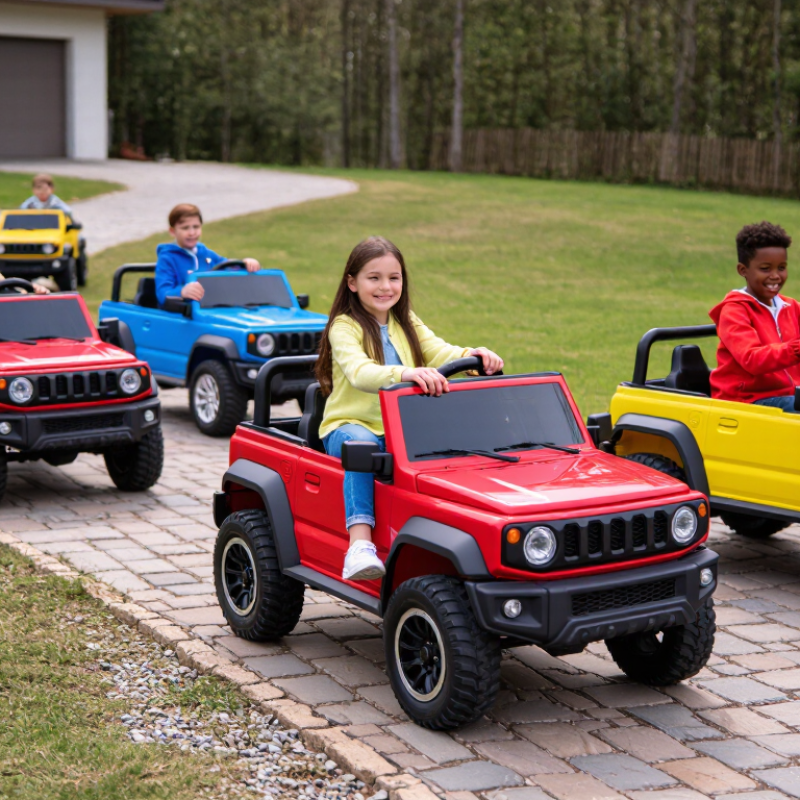
Outdoor use changes the buying checklist. Look beyond styling and compare tire grip, ground clearance, braking, and controllable speed. Short grass, compact gravel, and sloped paving place different demands on a small vehicle. Small wheels struggle. Check the maker’s stated age, rider-weight, slope, and surface limits before choosing. The U.S. Consumer Product Safety Commission’s 2023 Toy-Related Deaths and Injuries report estimated 154,700 emergency-department-treated toy injuries among children aged 12 or younger. That figure covers all toys, not electric ride-on cars, so it is useful context rather than a product-specific risk rate.
For outdoor play, inspect whether the seat and footwell keep a child’s posture stable, and whether an adult can reach the controls quickly. Ask for clear battery run-time and charging guidance; cold weather, hills, and heavier loads can reduce practical driving time. Also check the manual’s limits for damp surfaces and storage. “Water-resistant” does not necessarily mean safe to drive through puddles. A washable-looking body can hide vulnerable electrical parts. I would prioritize predictable braking and simple controls over a higher advertised speed, though that trade-off may feel less exciting to an older child. A brief test on the intended surface can reveal problems that showroom floors conceal.
Use these practical criteria to compare kids’ electric cars intended for outdoor riding. Suggested figures are general selection guidelines, not universal product specifications; always check the model’s manual, age and weight limits, and local safety requirements.
| Selection Dimension | Outdoor Requirement or Practical Guide | Why It Matters | What to Check |
|---|---|---|---|
| Riding surface | Match the vehicle to the intended surface, such as smooth pavement, compacted paths, or short, firm grass. Many ride-on cars are designed primarily for relatively even surfaces. | Loose gravel, deep grass, mud, and steep or uneven ground can reduce traction and increase the risk of getting stuck or tipping. | Look for clearly stated surface limitations. Do not assume that an “outdoor” label means the vehicle is suitable for off-road use. |
| Tires and traction | Choose tire materials and tread suited to the planned surface. Traction-focused tread may help on firm paths, while smooth tires are generally better suited to hard, even ground. | Grip affects starting, turning, and stopping. Tire type alone does not make a ride-on safe on wet or loose surfaces. | Check tire material, tread pattern, wheel attachment, and whether replacement tires are available. Keep tires clean and inspect them for wear. |
| Ground clearance and stability | For slightly uneven paths, compare the stated ground clearance and wheelbase with the surface. Prefer a broad, stable base and a low center of gravity. | Low clearance can cause the underside to scrape; an uneven load or sharp turn can affect stability. | Review the product dimensions and stated terrain limits. Avoid steep slopes, curbs, steps, and obstacles unless the manual specifically permits them. |
| Motor and drive | Motor configuration and battery voltage vary by model. Select a setup that suits the child’s size, the intended surface, and the manufacturer’s age and weight guidance. | More power does not automatically mean better outdoor performance; traction, vehicle weight, surface, and speed control also matter. | Check the rated load, drive-wheel arrangement, motor specifications, and whether the vehicle has a low-speed setting or gradual start. |
| Battery and usable runtime | Compare the battery type, capacity, charging time, and stated runtime. Actual runtime can vary with rider weight, terrain, temperature, speed, and battery condition. | Outdoor routes may place a greater load on the motor than smooth indoor floors, which can shorten use between charges. | Follow the specified charger and charging instructions. Check whether the battery is replaceable and how it should be stored when not in use. |
| Speed control | Choose a model with a speed suitable for the child’s age, experience, and riding area. A low-speed mode can be useful for beginners. | A child needs enough time and control to steer and stop, especially when riding outdoors. | Confirm the stated speed, speed settings, parental remote-control functions if provided, and instructions for adult supervision. |
| Braking and stopping | Check how the vehicle stops, including whether releasing the accelerator engages an automatic brake. Braking performance depends on the surface and vehicle condition. | Wet, loose, or sloping surfaces can increase stopping distance or reduce control. | Read the braking instructions and test the controls in a clear, level area before regular use. Do not rely on a ride-on car as a substitute for an adult-controlled safety barrier. |
| Weather and water exposure | Use the vehicle in dry conditions unless the manufacturer expressly permits otherwise. Do not assume the battery or electrical components are waterproof. | Water can damage electrical parts and create a hazard. A water-resistance rating, when provided, applies only to the conditions described by that rating. | Look for a specific ingress-protection rating and its stated limits. Keep the vehicle away from puddles, heavy rain, and standing water unless the manual explicitly allows exposure. |
| Fit, age, and rider capacity | Choose a seat and control layout that fit the child while remaining within the manufacturer’s age and maximum-load limits. | A child who cannot reach or operate the controls comfortably may have difficulty steering or stopping. | Check the permitted rider age and weight, seating space, footwell, belt instructions, and whether the vehicle is designed for one or more riders. |
| Visibility and riding area | Use the vehicle only in a supervised, separated area away from roads, driveways, pools, and other hazards. Reflective or high-visibility details can help adults see the vehicle. | Small ride-on vehicles may be difficult for drivers and other people to notice, and they are not designed for road traffic. | Check the manual’s rules for supervision and suitable locations. Use age-appropriate protective equipment and keep the riding area clear. |
| Durability and maintenance | Look for securely fitted wheels, robust connections, accessible service information, and readily available replacement parts. | Regular checks can identify loose fasteners, damaged wiring, worn tires, or battery problems before they affect use. | Follow the maintenance schedule. Inspect the vehicle before riding and stop using it if a safety-critical part is damaged or not working correctly. |
Short grass, compact gravel, and firm patios place different demands on tires. Small wheels struggle. Check the manual’s surface and damp-weather limits.
Follow the maker’s age and weight limits. Check that knees clear the dashboard and feet reach the pedals comfortably. Age alone isn’t enough.
Wider tires, stable construction, and good ground clearance can help on bumpy paths. Measure narrow gates and turns before choosing.
Look for a well-fitting seat belt, door locks, stable wheelbase, and an easy-to-reach brake. Supervise every ride. Belt fit matters.
Treat advertised runtime as an estimate. Hills, cold weather, heavier riders, and grass can shorten a ride. I still find runtime easy to overestimate.
Multiply voltage by amp-hours to estimate watt-hours. This gives a useful comparison, but it does not promise a specific ride time.
Yes. Try a short ride on the intended surface, then check steering and braking. Short test first. Showroom floors may hide problems.
Follow the manual’s charging and storage guidance. Keep the charger dry, and stop if the battery or connector feels unusually hot.
Choosing the right electric car for outdoor use starts with the child’s age, size, and experience, as well as the terrain where the vehicle will be driven. A compact, low-powered model may suit younger children and smooth paths, while older or more confident drivers may need a sturdier car with suitable power, traction, and ground clearance for varied surfaces. When considering how to choose kids electric cars suitable for outdoor use, compare safety features such as seat belts, stable construction, reliable braking, and parent controls alongside battery life and driving performance.
Also assess the manufacturer’s build quality, materials, and relevant product certifications, and check whether the car is designed to withstand regular outdoor play. Before buying, review the warranty, availability of replacement parts, and responsiveness of after-sales support. A good choice balances age-appropriate performance, dependable safety, durable construction, and ongoing support, helping families find an option that offers lasting value for their intended use.

 Whoo Toys